Wednesday, July 18, 2018

Interview with Michael Sean Breeden from Conversations on Dance

It seems like podcasts are all the rage these days in the ballet world. I think dancers tend to prefer that medium for expression instead of blogging, because it involves more of a performance than a blog. And, you know we love a good performance. Another reason is that podcasts involve a little less editing, which is helpful, especially after a long day in the studio. Whatever a dancer's reason may be, many have been starting their own podcasts and some of them are actually informative and fun to listen to. 

Following yesterday's post about my favorite blog, today I would like to tell you all about my favorite podcast, Conversations on Dance. This podcast was started by Rebecca King Ferraro and Michael Sean Breeden, both ex-dancers from Miami City Ballet. They use their platform to give a little insight into this crazy and beautiful world of ballet. They have interviewed everybody from principal dancers to choreographers on the rise. 

I emailed them a few days ago because I thought it would be fun to interview one of them for Bullet Pointes. Since they interview others all the time, I thought we could turn the tables and interview them for a change. To my surprise, Michael Sean Breeden responded right away and graciously took time out of his day to answer a few of my questions. Here is the full interview below. 

Bullet Pointes: First of all, whose idea was it to start Conversations on Dance? What prompted you to take on such an endeavor?

Michael: My co-host, Rebecca Ferraro, came up with the idea. She was cruising through iTunes one day, looking for a dance related podcast to listen to and realized that options were very thin. Rebecca and I had been hosting some of Miami City Ballet's pre-performance talks with the audience, discussing the ballets on the program and our role as performers in them. Rebecca realized that we could take that format to the podcasting world and hopefully bring some insight to our experience as dancers to those who might be interested. 
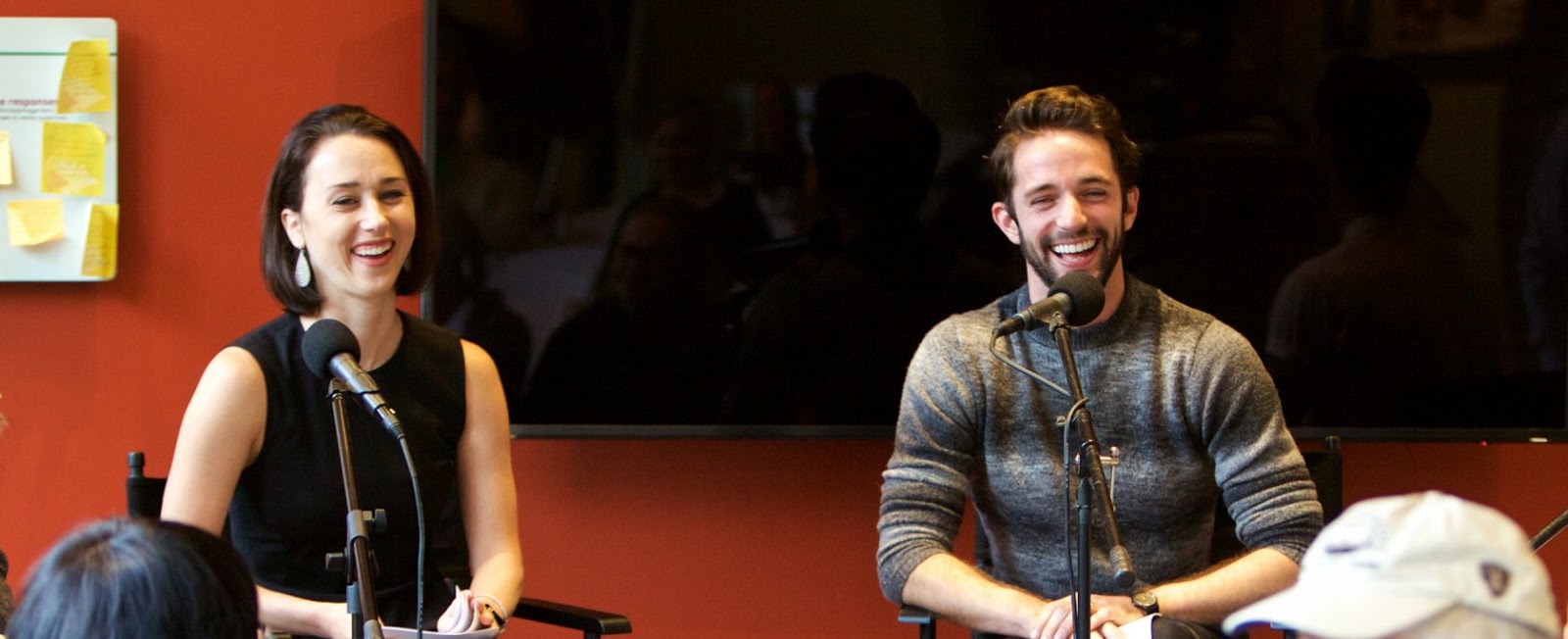
Rebecca King Ferraro and Michael Sean Breeden from Conversations on Dance 

Bullet Pointes: How did you build this podcast into what it is today? What did it look like at the start compared to what it is now? 

Michael: It mostly built pretty organically. For our early episodes, we asked friends of ours with prominence in the dance world to come talk about their experiences, like James Whiteside and Justin Peck. I think the interest surrounding these figures helped build some buzz about the podcast itself, and eventually we built a small but loyal following. 

I think what propelled us into what we are today is the generosity of one of our guests, Heather Watts. She had a positive experience on the podcast, and thought that we would be an asset for the Vail Dance Festival, in which she plays a major role curating and coaching. This laid the groundwork for future engagements with the Kennedy Center and San Francisco Ballet that have continued to bring exciting content to our listeners. We are extremely grateful to Heather for believing in us. 

Heather Watts in the Winter Section of Jerome Robbins' The Four Seasons

Bullet Pointes: What would you like to achieve with this platform?

Michael: One major hope Rebecca and I have is that through our podcast we are able to help aspiring dancers, and their parents, navigate through some of the more difficult or upsetting moments that a career in dance can present. If, through relaying my personal experiences as a corps member who was not handed an easy or simple path, I can help even one young dancer understand themselves a little better, or give them hope that persevering through their trials will be worth it in the end, then I'll consider the podcast a success.

Bullet Pointes: What is the process behind preparing for these interviews? 

Michael: Rebecca and I generally do research before, skimming through old articles or books that have been published about our subjects. Then, we will brainstorm together about questions that we personally might want answered. One thing that is unique about our podcast is that we are dancers ourselves, so we really lean into questions that make us tick, but ones that a typical writer might ignore.

Bullet Pointes: Who was the first person you interviewed? 

Michael: Leigh Witchel. He is a wonderful writer, with a great mind, and a long time friend of mine. I'm so glad he was our first guest. 

Leigh Witchel

Bullet Pointes: Which episode is your favorite and why? (You can list multiple episodes if you want.) 

Michael: Heather Watts, and not just because she has been so generous to us. She opened in a way that was brutally honest, almost shocking, and completely disarming. Rebecca and I were in tears. If someone who has never heard the podcast asks us for an episode to start with, we always say Heather.

Click this link for Heather Watts' episode from Conversations on Dance (Her episode made me cry too!)

Bullet Pointes: I might know the answer to this question, but who is your dream interviewee, dead or alive? 

Michael: George Balanchine. I think he's the greatest choreographer of all time, and dancing his ballets has given me the greatest joy of my life. I don't even know where I would begin. 

George Balanchine (By the way, I knew Michael would say him!)

Bullet Pointes: Can you tell us something you learned about the world of professional ballet that you didn’t already know? 

Michael: Maybe just that no one has an easy path? It's very easy to imagine that those at the top have never dealt with any of the same issues that corps de ballet members confront. So many major principals have told us of early rejections, major setbacks they had to push through in order to become who they are. 

Bullet Pointes: How did you spread the word about your podcast?

Michael: We knew that with zero budget our best chance to spread the word was to drum up positive word of mouth, so we simply focused on putting out the best product possible. We've been very lucky that the fans of the podcast have been vocally supportive of our show to others that would be interested as well. 

Bullet Pointes: Is there any advice you can give others trying to start a blog or podcast? 

Michael: I would say to focus on delivering the best content you can and be true to yourself. If you are trying to achieve a level of success, you'll only be distracted. People will respond to your genuine passion about the subject you are covering.

Michael and Rebecca definitely deliver fantastic content that speaks to dancers everywhere, from professionals to those just starting out in ballet. Seriously, head over to their website and listen to their podcast. This is not an ad! I just genuinely believe every dancer should be tuning in to hear this magic.


Tuesday, July 17, 2018

Discussion with Haglund

Anybody looking for some juicy ballet gossip with a side of sass? Well besides my blog (insert hair flip emoji here), Haglund's Heel is my favorite go to blog for all the drama. I love some good tea, and Haglund never fails to serve it. However, I don't usually involve myself in the discussion, until now. 

While scrolling through Haglund's blog, I noticed that Haglund also reviewed ABT's Harlequinade. I posted my own review here in Bullet Pointes on June 19th, after I attended the performance on June 8th. Haglund reviewed the same cast as me, and it seems like we share a few of the same opinions. Especially, our thoughts on Sarah Lane's performance.

Haglund enjoyed her performance so much, that they awarded Ms. Lane the famous H.H. Pump Bump Award. Click here to read Haglund's full review of American Ballet Theater's Harlequinade. Also make sure to check out the super cute pump he awarded the prima ballerina. 

After reading through Haglund's post, I wish they elaborated more on what they actually enjoyed about Sarah Lane's performance. I was so curious as to why the award was given to Ms. Lane, that I decided to comment and ask. 
Hey Haglund,
Can you elaborate on what you loved about Sarah Lane's performance that evening? Unfortunately, that was the only cast I was able to see that week. However, she blew me away when I saw the performance on June 8th at 8pm. She breezed through the extremely difficult choreography with ease and grace. Were the other trinas able to pull off those hops on pointe the way she did? Just curious. 
Also, that was a fantastic analogy. Couldn't have said it better myself. Totally captured how I felt about the reconstruction of this dated ballet.
Haglund never fails to respond to a good question, especially one from a fan. Haglund responded a little over 24 hours later.
Hi, Kristen.
I saw Sarah's performance and the opening night when Isabella Boylston managed the hops on pointe in a rather anxious and lumbering fashion. I didn't see the other two casts.
I wish Haglund elaborated more on what he liked about Ms. Lane's performance, but nevertheless I am happy I received a prompt response. However, I am thankful Haglund answered my second question. Seems like the other principal ballerinas were not as proficient in their hops en pointe as Sarah Lane.  

After reading Haglund's response, I am happy I was able to see the cast featuring Sarah Lane as Columbine. Good for you Sarah Lane! Can't believe it took them so long to promote you to principal dancer! Glad to see you thriving. 


Wednesday, July 11, 2018

My Wikipedia Edit is Still There!

Being that it has been nearly a month since I updated PUMA's Wikipedia page, I decided to return to the site and see if my little paragraph was still there. Well, guess what? It is!

On June 23rd, I blogged about my journey down the Wikipedia rabbit hole in an entry titled, #SweatBeauty. When I landed on the PUMA (brand) Wikipedia page, I noticed that the brand's collaboration with New York City Ballet wasn't mentioned at all under sponsorships. I then took it upon myself to amend the sponsorships section. I added a short paragraph describing PUMA's collaboration with my beloved company.

I believe it is important for a ballet company to be listed right next to all of those other big name celebrities and athletes. It helps with name recognition, and will hopefully help bring more people into the theater. 

I am very happy to say that my addition to the PUMA Wikipedia page is still there. I hope it stays there as long as our collaboration continues.

Monday, July 9, 2018

Instagram Dancer Merch

There is a new trend that I must tell you about! I am calling it dancer "merch," and it is becoming pretty popular in the world of dancer Instagram celebrities. 

Previously dancers have pushed sponsored products, which are sometimes pretty hit or miss. For example, Sara Mearns pushes vibrating rollers and Tiger Balm products. Do they actually work? No idea, but we know she is getting something in return for pushing those products. 

Dancer "merch" is different. Ballet Insta-celebs are now pushing their own T-shirts and sweaters that they crafted themselves. Dancer creativity is something I think we should support, especially if we get a cute T-shirt out of the deal. 

Now who are these ballet celebs? Well, in a previous post I mentioned my favorite Top Ten Ballet Instagram Accounts. Two out of the ten Instagram accounts I mentioned now have their own dancer merch, and you must take a look.

Ballet Moods (@balletmoods), my absolute favorite account to follow, has now released three different T-shirts with their most popular memes on the front. I previously mentioned that they have cool T-shirts, but their newest one might be their best yet. Below is Ballet Moods newest creation:


This new T-shirt is hysterical, and the timing couldn't be more perfect as most ballet dancers will be returning from layoff soon. Click the link in their Instagram bio for purchase.

Next up, is number 5 on my top ten list, Isabella Boylston (@isabellaboylston). Isabella recently released her new merch just this weekend. And the best part is all of the proceeds go to two different causes!


There is a pizza T-shirt/tank and a love T-shirt/sweater.  The pizza T displays ballerinas accompanied with cute wordplay based on her first name. If you purchase the pizza T, all of the proceeds go to the National Dance Institute. All of the proceeds from the love shirt go to Days For Girls International. 

It's time to get our merch on! Also if you are lucky, both Instagram accounts might repost a picture of you in their merch if you tag them. 

Saturday, July 7, 2018

ALERT: New Ballet Documentary!

Well it looks like I jumped the gun last week with my post about ballet documentaries to watch over the summer, because there is a new ballet documentary on the horizon. And it looks like a good one!

Tiler Peck, one of New York City Ballet's principal dancers, is the star of a new documentary film that chronicles her curation of the BalletNOW program last summer in California.  She was the youngest female in history to curate a program for this ballet festival. 

Tiler has stated that this documentary film, Ballet Now, shows her "most exhausted, honest self." She was juggling three different hats during the festival including director, producer, and dancer. At one point she would be in the audience watching and correcting others, and then immediately after she would jump backstage and throw on a tutu. 

This documentary also has some real celebrity power behind it. The director is Steven Cantor, who is no stranger to a ballet film. He also directed Sergei Polunin's film, Dancer. Elizabeth Moss, currently famous for her role in the Handmaid's Tale, is one of the executive producers along with Paul G. Allen. Elizabeth and Tiler actually have something in common, they are both alumni of the Westside School of Ballet in Santa Monica. According to Tiler Peck, Moss was excited to help with the project because she wants  to bring ballet more into the mainstream.

I wonder if Elizabeth's connections are what brought the film to Hulu? Yes, you heard me right. The film will be accessible to everybody with a Hulu account. So you don't even have to pay the admission price at a theater, you can watch it one summer night on your couch.

Ballet Now is available on Hulu starting July 20th. If you can't wait until then you can also click this link for the preview. 


Friday, July 6, 2018

To Fouetté, or Not to Fouetté, That is the Question

Ah the famous 32 fouetté turns in Swan Lake. It is one of the most difficult turning sequences a ballerina must complete in the extremely coveted role of the black swan, Odile. Recently, these turns sparked a heated debate in the ballet world. This debate focused specifically on ABT principal dancer, Misty Copeland, and whether or not she should dance the role of Odette/Odile. 

The social media debate began when a video of her failing to complete the consecutive turns, as choreographed, went viral. 


Misty Copeland and partner Herman Cornejo in ABT's Swan Lake 

The question raised is, should a ballerina be allowed to perform this part, if they are unable to do the consecutive fouettés? 

It is every young ballerina's dream to dance the lead role in Swan Lake. However, most are not up to the task because of the technical nature of the role and also the level of artistry needed to deliver such a complex part.

Most ballerinas are either a black swan or a white swan. It takes a true artist and technician to deliver the two contrasting parts with great success. The white swan involves slow controlled movements, with plenty of romance and vulnerability. The black swan is the opposite of the white swan. She is the seductress, and requires a fiery flirty disposition with a lot of technique to complete the turns required for the part.

It is quite rare for a ballerina to posses both sides of this creature. It is also equally rare to find ballerinas who are able to complete the 32 fouettés. Especially during the third act, when they are exhausted both physically and emotionally after the white swan in act two. 

Also, I have seen ballerinas who execute the turns perfectly in rehearsal, and then go onstage and mess up the fouetté turns during the performance. The turns require superhuman strength in that left supporting leg. Dancers watching backstage in the wings are always on edge when watching these turns. They either end up in cheers, or turn away wincing at the sight of failure. 

According to multiple sources, Misty Copeland has always had extreme difficulty with these turns. Therefore, after watching the above video, people started commenting on both YouTube and Twitter.  The comment that caught Misty  Copeland's attention was by Henrietta (@miss_hokie). She called Misty the "WORST" and an embarrassment to ABT. 

Misty clapped back with the most eloquent statement. Here is just a selection below:
As a black woman and as a ballerina given the chance to take on this role. I often question if I deserve to perform this role. My conclusion, I do. Some of the most memorable Swan Queens in history have brought so much more to this role without having to present the incredible and evolved technique of today by doing insane tricks that bring some to see Swan Lake. For the anticipated 32 fouettés. But it is so much more than that.
I completely agree with her. The role is so much more than those 32 fouettés. I know that as an audience member myself, I would rather see a moving performance than something that is basic and boring, but technically proficient. 

When I go to see Swan Lake, I want to be moved to tears. I want an emotional response. Sometimes crazy fouettés bring out an emotional response, but often times it is the artistry of the performer that takes the performance to the next level.

As much as we try to seek perfection as ballerinas we know it isn't possible. Mistakes happen. For me, it is more exciting to watch a ballerina go for broke on the stage, then to watch something safe. Misty went for it. And when she failed, she recovered with the grace of a true professional. 

Fouettés aren't the end all be all of that part. Many famous former ballerinas like Anna Pavlova, Alicia Markova, and Alexandra Danilova avoided them and did another step entirely. Those ballerinas were amazing artists and I am sure their performances did not suffer because of it. 

Therefore, I believe that the answer to the above question is that ballerinas should be allowed to perform the role even if there are not technically proficient in the fouetté turns. However, they must be able to deliver an emotional response. They must also possess the artistry required to perform both Odette and Odile. That is even harder to find nowadays.

Keep going Misty, I am rooting for you. I am also grateful for everything you have done so far for this art form.  

Sunday, July 1, 2018

English National Ballet's First Gender Fluid Ballerina

Justin Peck started a social media discussion when he created two gender neutral roles for his ballet, The Times Are Racing. The first role was originally performed by Robert Fairchild and then was given to Ashly Isaacs (a soloist with NYCB). She pulled off a lot of technical steps that are usually exclusively reserved for men with just as much, if not more energy and efficiency. 

The second role was was just as revolutionary. Taylor Stanley (male principal dancer) stepped into Tiler Peck's (female principal dancer with no relation to Justin Peck) role and danced the third movement pas de deux with Daniel Applebaum. This featured male duet was a first for New York City Ballet and sparked a social media discussion.

This discussion about gender roles in ballet immediately became a hot topic. Even Alexei Ratmansky put his two cents in. He stirred the pot by claiming there is, "no such thing as equality in ballet."

This did not go over well, especially during the beginnings of the 'Times Up' movement. The uproar surrounding his tone deaf comments lead to him clarifying his remarks by explaining that believes some rules in ballet were made to be broken, but that he prefers to work within the gender roles defined by the tradition of the art form. 

Luckily, some directors and choreographers feel differently than Ratmansky. People like Justin Peck and now Tamara Rojo are influential people paving the way to a more inclusive and diverse art form. 

In March, Tamara Rojo hired Chase Johnsey (pictured below)   as a first artist with the English National Ballet with a trial contract. Short term contracts aren't completely out of the norm, but Mr. Johnsey is. Chase identifies as gender fluid and uses male pronouns, but wants to be seen as a ballerina.  

Chase Johnsey

He has completely transformed his body so that he could meet the demands associated with the ideal ballerina image. Chase had facial surgery to feminize his features, lost 20 pounds while working with a nutritionist, and also worked with a physical therapist and ballet mistress to reshape his body to look more feminine. 

Mr. Johnsey's goal is to one day dance as one of the swans in Swan Lake or as one of the wilis in Giselle. This requires blending in with the female corps de ballet, which is an extremely difficult job on its own. 

So far, he is well on his way. Chase has already performed with English National Ballet in their production of Sleeping Beauty as a female courtier (pictured below). 


Chase Johnsey in Sleeping Beauty with ENB

Judging from the photo above, I believe that one day he will be able to dance in line with the swans. Ms. Rojo believes the same. When asked by the New York Times if one day Mr. Johnsey could be a swan or a wili Tamara Rojo replied, "I don't see why not." 

This is a huge step for the ballet world, a traditionally highbrow exclusive art form. However, these small steps leave me hopeful that this art form will reflect the world that we live in today. 

Ballet Is Woman